Case Study — 01
- Company
- Yara International
- Title
- Design Lead
- Team
- 5 Direct Reports · Team of 20
- Period
- Aug 2023 – Aug 2025
- Stack
- Figma · Ahua DS · React · Storybook
YaraPlus Platform
Yara's third attempt to unify eight independent agricultural products under a single platform and brand. YaraPlus required not just design system work — but building the team, process, and culture capable of sustaining a platform at European scale.
Users in year one, against a 5k target
Component adoption following regional library launch
User satisfaction, measured via NPS surveys
Independent products unified under one platform and brand
Eight products.
One platform.
Zero alignment.
YaraPlus was Yara's third attempt to unify its European digital portfolio. Eight standalone agricultural products—each with distinct visual language, interaction patterns, and user assumptions—had to become a single experience under one brand. The scope covered not just product design but also building the system, process, and team to sustain it.
Davide (Senior UX Manager) recruited me as a design systems specialist, appointing me Design Lead and later manager of 5 within a 20-person team. The challenge was to build infrastructure for consistent, quality-controlled design across a complex, multi-product platform that had repeatedly failed to unify.
Before system.
Brand first.
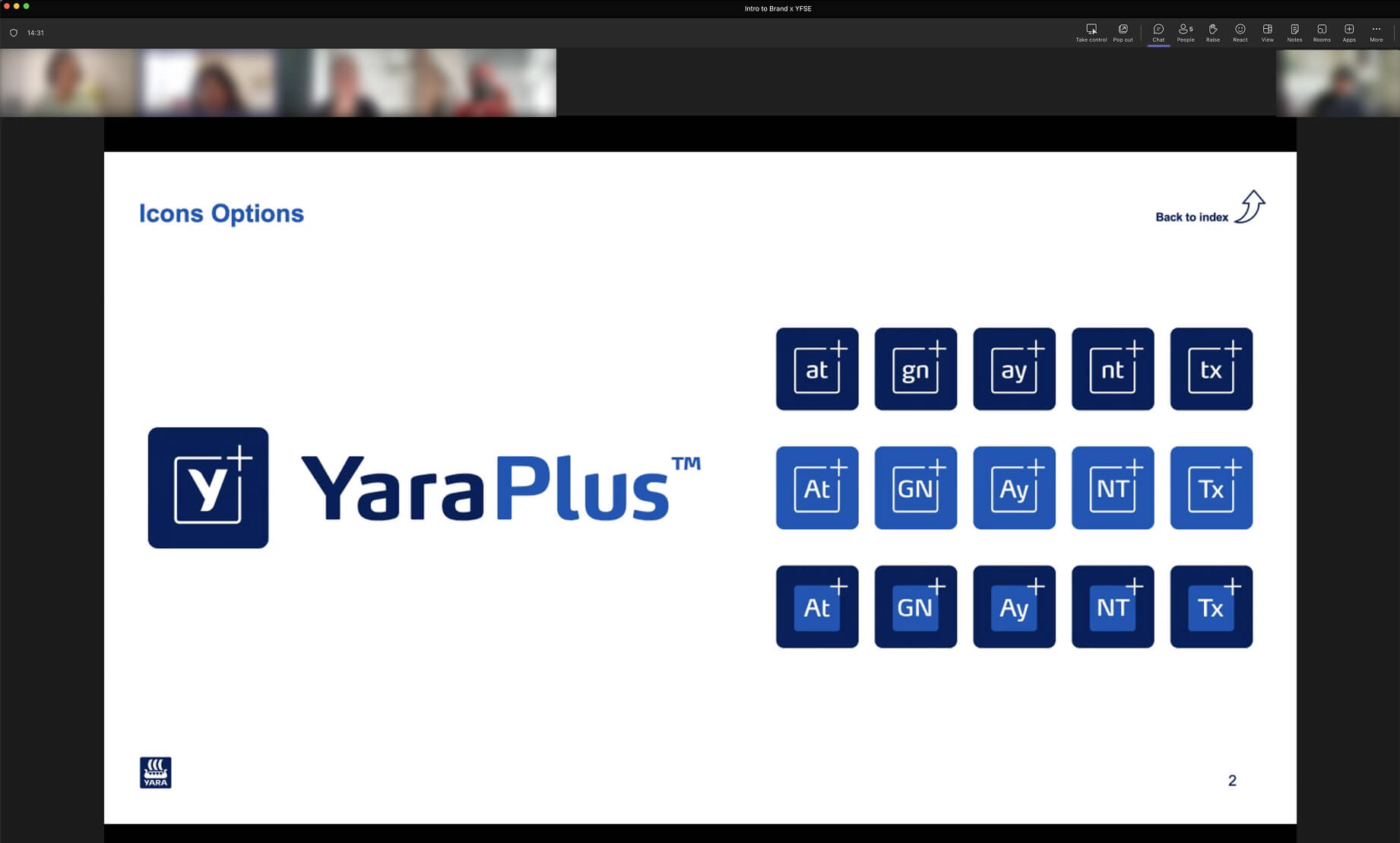
Regional design began only after the brand was established. I worked with the regional brand manager to shape the YaraPlus brand strategy and visual direction, facilitating workshops with stakeholders to ensure all voices were represented. Decisions here would influence every component, screen, and product.
Once the Global Brand team approved the direction, I oversaw implementation of the brand materials and assets into the product — creating Figma components in a dedicated shared library for the regional team. This library became the seed of the regional design system: the first components from which the Ahua Design System's branches would eventually grow. The product was prepared for launch in February 2024, on schedule.
A branch,
not a fork.
As the library evolved, it became the first regional extension of Ahua, Yara's global design system. The critical architectural decision was to build it as a branch—preserving connection to the global system—rather than a separate fork, which would repeat past fragmentation. The regional library inherited Ahua's token model and component architecture, adding regional and product-specific components where needed.
This structure brought clear benefits. Regional teams could use global Ahua components, override with regional variants as justified, and contribute new components via the established framework. The regional library extended, not duplicated, the system, keeping feedback open to the global community. For the first time, a regional team worked within the global system.
Ahua Design System
Tokens · Components · Guidelines · Contribution frameworkYaraPlus Regional Library
Extends tokens · Regional components · Overrides where neededYaraPlus platform
Process as
a product.
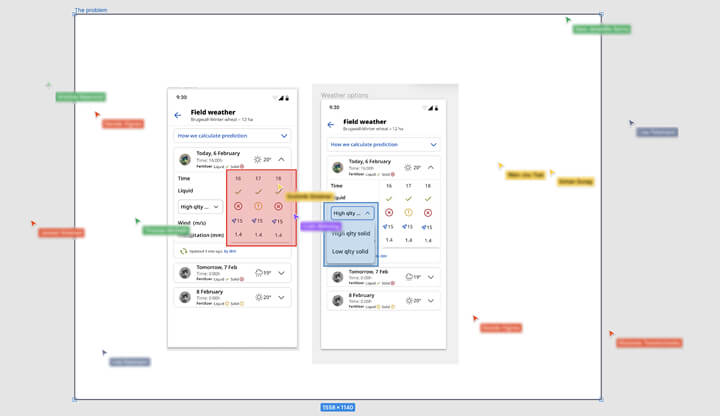
In April 2024, I led the YaraPlus UX team, shifting from design work to enabling team quality and speed. My first major change was cross-team DesignCrit sessions—replacing isolated work with shared critique, unifying vocabulary and accountability beyond individual product briefs.
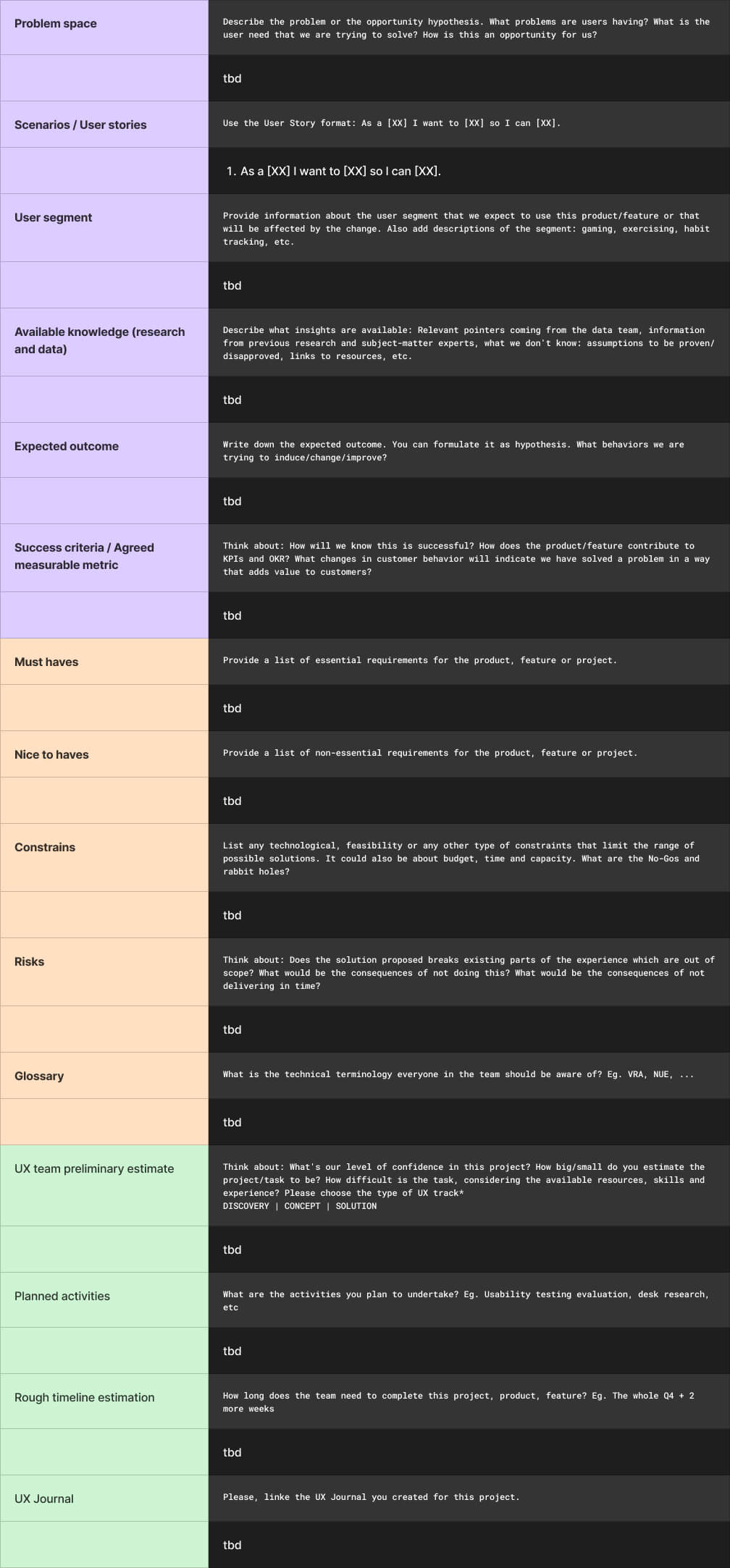
Alongside crit culture, we implemented a standardised UX process—including UX journal and brief templates that formalised problem definition before design. This embedded best practice into workflow and structured design execution: problems preceded solutions, and process preceded divergence.
Quality encoded,
not assumed.
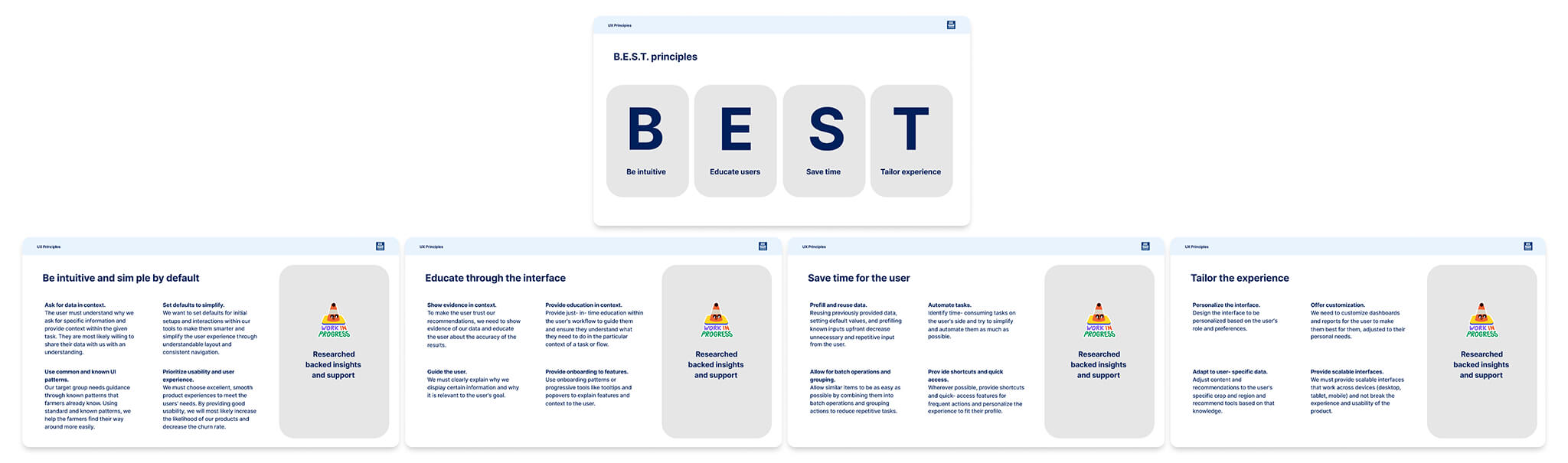
In Q3 2024, I established UX principles and guiding standards for YaraPlus — explicit, testable design decisions that defined what good looked like for this platform specifically. These weren't aspirational statements or wall art. They were working tools: concrete enough to reference in a design review, specific enough to create alignment when two designers disagreed.
To raise the baseline across the team, we ran surveys on how the design system was actually being used and where adoption was falling short — then built mandatory training for all designers directly from those findings. The goal wasn't compliance; it was building shared understanding of the system's logic so designers could make correct decisions independently, without asking. Component adoption rose 40% in the period following training.
What actually
changed.
Eight fragmented products were unified under a single platform and regional design system branch. Twenty designers—previously working in silos—gained shared process, standards, and a feedback loop via DesignCrit. YaraPlus became Yara Europe's flagship and exceeded its first-year user target by a factor of 2.
- →
~10k users in year one, against an initial target of 5k
2×user target - →
Component adoption rose 40% following the regional library launch and designer training
+40%adoption - →
User satisfaction improved by 15 points, measured via NPS surveys
+15ptsNPS - →
UX workflow eliminated bottlenecks and prevented recurring deadline overruns across the team
0overruns - →
Visual and interaction consistency achieved across all eight regional products for the first time
8products aligned
“Since he took on the design lead role for my product initiatives, we saw significant improvements in design quality, delivery speed and overall team momentum. […] He consistently advocates for user needs while balancing business goals, ensuring that what we build is both valuable for customers and impactful for the business.”
Lessons that
cost something.
YaraPlus was the first project where I held full leadership responsibility for a large, cross-functional design team on a platform with real organisational complexity. The system work went well. The leadership lessons were harder.
I addressed problems too late
Misalignment between vision and scope with other teams was apparent early. I let issues continue too long before escalating. Unresolved misalignment grows costlier over time. Raising problems with the right people, early and directly—without waiting for certainty—was a skill learned under pressure.
I lost focus chasing the wrong problems
I spent too much time on minor issues and edge cases rather than on root causes. That distracted from what a Design Lead must protect: clear vision and progress. Knowing when to let go and redirect effort is something I’d do differently now.